
Let’s be honest – we wait all winter for a Winnipeg summer. When you live in a gorgeous, established neighbourhood like River East, your backyard pool is the ultimate summer sanctuary. Whether you’re kicking back after an evening walk along the Bunn’s Creek Parkway or hosting the whole neighbourhood for a weekend BBQ, you want to squeeze every single day out of our short swimming season.
But to do that, you need a reliable way to heat your pool water. Nobody likes jumping into a pool that feels like Lake Winnipeg in mid-October.
When looking into swimming pool heaters, Winnipeg pool owners usually run into a big debate: Should they go with a traditional gas pool heater or make the leap to a modern electric heat pump pool heater? It’s not a simple choice, especially with older properties. In this guide to natural gas vs. heat pumps pool heaters, we’re going to break down the real-world pros and cons of each heating system, specifically focusing on what actually makes sense for the massive trees and older lots in River East.
The Wildcard: Our Unpredictable Manitoba Climate
Let’s talk about the elephant in the yard: Our weather. Our average temperature can swing from a scorching 35℃ / 95℉ July afternoon to a crisp 12℃ / 54℉ evening by the time the sun goes down. We deal with much cooler, crazier weather conditions than people who own pools in warm climates down south.
Because of these swings, your choice of pool heater makes a massive difference in how often you actually get to swim. You need a heating solution that can handle the reality of cold climates during those chilly nights in May and September, while easily holding your desired temperature during the dog days of summer.
Gas Heaters: The Muscle Car Of Pool Heating
For a long time, gas heaters have been the go-to standard for keeping Winnipeg outdoor pools warm. Whether they are hooked up to a gas line or running as standalone propane units, they bring serious, uncompromising heating power to the table.
How They Work (In Plain English)
Think of a gas heater like your home’s furnace. Most gas heaters require burning fuel in a combustion chamber. As your pool pump runs, the cold water passes through a part called a heat exchanger (basically a series of copper tubes). The burning gas heats up those tubes. The system transfers that warm gas heat directly into the water and pushes it back into the pool nice and toasty.
Why You Might Love Natural Gas
The absolute best thing about natural gas is speed. It’s all about rapid heating. A properly sized unit will heat the pool faster than anything else out there.
This makes it the perfect setup if you are a “weekend warrior” – someone who leaves the pool cool all week to save money, but wants on-demand heating ready for Saturday morning. It’s also the only way to go if you want to quickly fire up an attached hot tub to 40℃ / 104℉ on a freezing October night. No matter what the outside temperature is doing, a gas heater doesn’t care. It just fires up and does its job to heat water.
Electric Heat Pumps: The Eco-Friendly Marathon Runner
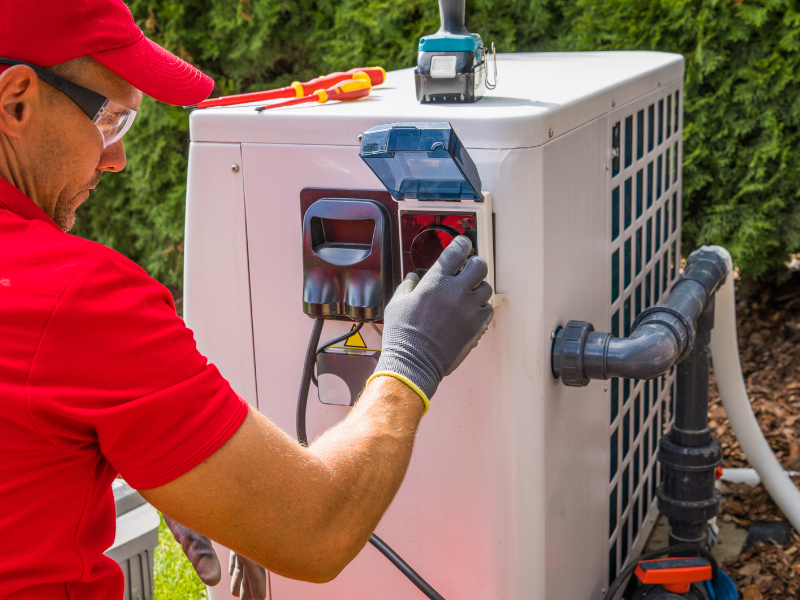
Instead of burning fuel to generate heat, electric heat pumps take a totally different approach: They just transfer heat from the air into your pool.
How Heat Pumps Work
So, how do heat pumps work? It’s actually exactly like your kitchen refrigerator, but in reverse. A fan pulls in warm air from the outside. This ambient air blows across an evaporator coil that’s filled with liquid refrigerant. The refrigerant sucks the heat right out of the outdoor air. A compressor then squeezes that warmed-up gas, making it super hot, and passes it through a titanium heat exchanger to warm your cool water before sending it back to the pool.
Why You Might Love Electric Heat
The biggest perk of pool heat pumps is mind-blowing energy efficiency. Yes, they run on electricity, but they use way less power than old-school electric resistance heaters. This translates to significantly lower energy bills.
They are incredible for homeowners who just want to set their thermostat to 28℃ / 82℉ and forget it, keeping a consistent temperature all summer long.
But here’s the Winnipeg catch: Because they rely completely on finding warm air to pull from, heat pumps typically start to struggle when the air temperature drops below 10℃ / 50℉. When it gets too cold, there just isn’t enough heat in the air for them to harvest.
The Manitoba Hydro Bonus
When we talk about electric heat pumps here at home, we have a massive geographical advantage. Because our grid runs on clean hydroelectricity, running an electric heater has a tiny carbon footprint. Plus, our electric costs are some of the lowest around. This makes the energy savings of a heat pump much more appealing here than in almost any other province.

The Wallet Check: Initial Vs. Operating Costs
When looking at the cost difference between these two, it’s basically a showdown between upfront costs and long-term operating costs:
- Upfront & Installation Costs: Gas heaters are usually less expensive to buy, but if your older River East home needs a major gas line upgrade to handle the flow, your installation costs can jump up fast. Heat pumps, on the other hand, cost more to buy initially. They also need a good chunk of power, meaning your older electrical panel might need an upgrade before you can plug one in.
- Day-to-Day Operating Costs: This is where the heat pump wins hands down. The daily cost to run a heat pump is generally way lower than the fuel costs of running a gas heater constantly. Over a few years, a heat pump will usually pay for its higher sticker price through lower monthly bills.
Size Actually Matters
Whether you have a cozy above-ground pool or a massive concrete setup, you can’t just guess on size. Heaters are measured by BTU output (British Thermal Units). To find the right fit, we have to look at:
- The total square feet of your pool’s surface area (this is where you lose the most heat)
- The total volume and pool size in gallons
- The temperature rise you want (the difference between the cold tap water and your target temp), calculated per hour
If you buy a heater that’s too small just to save a few bucks, it will run 24/7, burning through gas or power, and your pool will still be cold.
The River East Tree Canopy Challenge
We all love River East for the huge, mature trees. But if your pool is sitting in the shade all day, you are missing out on free solar heat.
To fight this, a lot of pool owners use solar covers to trap the heat in at night. If you want to be super eco-friendly, pairing a highly efficient heat pump with rooftop solar panels (or a dedicated solar heater setup) gives you amazing, consistent heat for practically nothing.
But if your yard is completely shaded by giant elms and you want the water to heat up fast, the raw heating power of a gas heater is usually the safest bet to make up for the lack of sun.
Taking Care Of Your Gear And Beating The Winter
No matter which heating system you go with, proper maintenance is the only way to make it last.
Most gas heaters need an annual check to make sure the burners are clean, no critters have built a nest in the vents, and the gas lines are tight. Heat pumps just need you to keep the outside clear of leaves and dirt so the fan can breathe.
But the most important thing? Winterization. Any pool water left sitting inside your heater when November hits will freeze, expand, and completely destroy the unit. Professional winterizing in Manitoba isn’t optional; it’s mandatory to protect your investment.
Why UV Pools Is Your River East Neighbour
Picking the right pool equipment to heat the pool shouldn’t give you a headache. At UV Pools, we know exactly what it takes to deal with the quirky electrical panels and gas setups of older Bunn’s Creek homes, and we know how to beat the wild Winnipeg weather.
We don’t just sell you a box and walk away. We look at your specific yard, how your family likes to swim, and your budget, and help you find the absolute best fit.
Let’s Get You Swimming!
Don’t let our amazing, short summer pass you by because the water is too cold to jump into. Upgrading your heater is the best way to actually use your backyard.