



Winnipeg weather is hard on saunas: Deep winter cold, spring melt, summer humidity, and fast temperature swings. In Manitoba, steady seasonal sauna maintenance protects wood, benches, doors, heaters, stones, vents, and electrical components from moisture and movement.
Residual heat in the sauna stones and wood helps dry the interior after each session. Leave the door open and let the room breathe. Good ventilation between uses is one of the simplest ways to prevent moisture buildup. We also suggest using towels on seats to protect the wood from sweat and stains. A clear sauna maintenance schedule helps you catch small issues before they turn into expensive sauna repair calls.
Why Seasonal Sauna Maintenance Matters In Winnipeg
Winnipeg sauna care isn’t generic. Our freeze-thaw cycle, wind-driven snow, dry winter air, spring runoff, summer humidity, and sudden temperature swings affect door alignment, weatherstripping, heater performance, drainage, and even the base under an outdoor sauna.
Indoor and outdoor setups age differently. An indoor sauna deals more with condensation, room airflow, and hidden moisture. An outdoor unit faces roof snow load, drifting snow, pooled meltwater, ultraviolet (UV) exposure, and seasonal movement around the base.
A simple maintenance routine makes seasonal care easier:
| Frequency | What To Do |
| After Each Use | Wipe benches, dry walls, and leave the door open 30+ minutes |
| Weekly | Clean benches, wipe handles and glass, inspect corners for mould or mildew |
| Monthly | Vacuum debris, inspect sauna stones, check air intake vent and exhaust vent |
| Every 6 Months | Lightly sand benches, tighten hardware, inspect door seals, check the control panel and thermostat visually |
| Spring | Look for pooled water, warped doors, finish wear, rust, and snowmelt damage |
| Summer | Manage humidity, stale odours, condensation, and airflow |
| Fall | Do full winterization, inspect roof, vents, seals, drainage, and electrical feed |
| Winter | Clear snow safely, monitor heat-up time, watch for drafts, ice, and moisture intrusion |
Spring Sauna Maintenance Checklist After A Manitoba Winter
Spring is the recovery season. Check cladding, roof edges, seals, door alignment, and any pooled water or frost heave around the base. Inside, look for warped boards, rust, cracked stones, black spotting, musty odours, and moisture marks around corners or electrical penetrations.
Clean seats, backrests, and walls with a damp cloth or soft-bristle brush. A sauna-safe cleaner works well for routine cleaning. A light vinegar-water solution helps with sweat residue, and a mild baking soda cleaner works on stubborn grime around floors or non-wood surfaces. Don’t soak the wood. Leave the door open for several hours after cleaning so the room dries fully.
If your sauna has a floor drain, clear hair, dust, and residue. If it doesn’t, use less water and focus on wiping rather than rinsing. In a basement sauna, poor drying can lead to condensation behind walls. Failed insulation or a damaged vapour barrier can trap moisture where you can’t see it.
Summer Sauna Care Tips For Heat, Humidity, And Heavy Use
Summer can be just as hard on a sauna as winter. Higher temperatures and heavy humidity create ideal conditions for stale odours, condensation, mould, and mildew, especially in dark corners and under benches. Summer sauna care should focus on airflow, cleanup, and moisture control.
Between sessions, let the room breathe. Wet towels or rugs left inside can trigger musty smells fast. We suggest rinsing feet before using an outdoor sauna and sitting on a towel to reduce sweat marks on the wood. Broader public data on health impacts related to sauna use also reinforces why clean, well-ventilated conditions matter in home wellness spaces.
Make sure the air intake vent isn’t blocked and that the exhaust vent is pulling damp air out. If the room outside the sauna feels damp, a dehumidifier in the adjacent space can help, but it should stay outside the heated room. During humid stretches, check corners and hardware weekly because wood movement can loosen fasteners. Commercial sauna cleaners with fungicidal ingredients can be used as directed to eliminate mould.

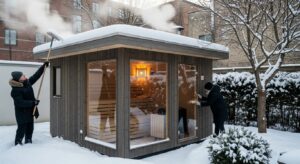
Fall Sauna Maintenance Checklist To Prepare For Cold Weather
Fall is the most important season for sauna maintenance in Manitoba. This is when you get ahead of freezing temperatures, snow load, and long stretches of heavy use.
Here’s the pre-winter route we recommend:
- Wash the exterior of the housing once or twice a year
- Check grading and drainage so water moves away from the base
- Look for frost movement, settling, or gaps under the structure
- Inspect weatherstripping and door seals for compression or cracking
- Confirm vents open and close properly
- Vacuum interior dust and debris
- Clean the heater exterior
- Inspect sauna stones for cracks, crumbling, or size loss
- Restack stones loosely so air can move around the heating elements
- Check the thermostat and control panel for normal operation
- Visually inspect Ground Fault Circuit Interrupter (GFCI) protection, where installed
- Look for corrosion, staining, or moisture near electrical penetrations
- Lightly sand benches every six months to once a year
- Confirm accessories are sauna-approved
Crumbling sauna stones should be replaced, and stones should never be packed too tightly. If the electric sauna heater can’t breathe, heat-up times get longer, and the elements work harder. Fall is also the best time to check for door alignment issues caused by seasonal wood movement.
If you’re already thinking seasonally about your backyard systems, our pool closing maintenance checklist follows the same practical logic.
Winter Sauna Maintenance For Safe, Efficient Performance
A well-built outdoor cedar, hemlock, or spruce sauna in Canada is made to handle winter, but it still needs care. Winter sauna maintenance starts outside. Keep snow and ice cleared from paths, doors, and especially the roof, using tools that won’t gouge roofing or wood. Heavy snow buildup traps moisture and adds stress to the structure.
Pay attention to the base, too. Manitoba winters can shift supports and create low spots where meltwater later pools during thaw. If the structure looks out of level, the door starts sticking, or water sits near one side, address drainage and support before spring damage sets in.
Inside, heat the sauna gradually instead of forcing it to full temperature right away. In extreme cold, an electric sauna heater can take longer to reach temperature, but the change should be reasonable. If heat-up times suddenly jump, the breaker trips, or the controls act strangely, inspect visually for moisture, corrosion, or freezing-related damage. If you can see exposed or bent heating elements, or if the control panel and thermostat stop responding normally, professional service makes sense.
After a deeper clean, run the sauna hot for about 30 minutes with the door slightly open so it dries thoroughly.
Year-Round Sauna Cleaning And Preventive Care Best Practices
The best sauna cleaning checklist is the one you’ll actually follow. After each use, dry benches and walls with a soft towel and leave the door open so moisture can escape. A weekly wipe-down and a monthly deeper clean are a solid baseline for preventative maintenance.
Use a sauna-safe cleaner or mild, non-toxic detergent on wood. A light vinegar-water solution works well for routine wipe-downs, and a mild baking soda cleaner can help on floors or around drains. Avoid bleach, harsh disinfectants, and anything that leaves a strong residue. For glass, clean the door only when the sauna is cold.
Different sauna types need different attention. A barrel sauna is more vulnerable to shell movement and door seal compression. A cabin sauna needs closer attention to roof details, siding, and drainage. An indoor sauna, especially in a basement, needs extra focus on airflow, hidden condensation, and the building envelope behind it. Interior sauna wood shouldn’t be stained, varnished, or painted.
Warning signs matter. A musty smell points to trapped moisture or poor ventilation. Black spots on wood usually mean surface mould. Soft boards can signal wood rot. Dripping condensation often means the room isn’t drying properly. A door that won’t seal usually comes back to movement, worn hinges, or tired weatherstripping.
We’ve also found that homeowners comparing materials appreciate understanding the benefits of a Canadian cedar sauna when choosing wood that stands up well to Manitoba conditions.
| Sauna Type | Most Vulnerable Issue in Manitoba | Key Maintenance Focus |
| Indoor Basement Sauna | Condensation, poor ventilation, and hidden moisture | Venting, drying, wall checks, floor drain care, and vapour barrier awareness |
| Outdoor Cabin Sauna | Roof snow load, seals, drainage, exterior finish wear | Snow removal, weatherstripping, grading, exterior care, winterization |
| Barrel Sauna | Door seal compression, curved shell movement, and roof exposure | Door alignment, band tension, roof checks, base drainage |
Frequently Asked Questions About Sauna Maintenance
Regular sauna maintenance includes cleaning surfaces, drying after use, periodic deep cleaning, and caring for the heater and stones. An electric sauna heater usually needs very little hands-on maintenance beyond staying clean and having properly maintained stones. We like this summary of Home Sauna Safety Tips because it aligns with the practical habits that keep home saunas comfortable and safe. Current research on sauna benefits and maintenance also supports the value of consistent upkeep.
How often should a home sauna be cleaned?
After every use, wipe and dry the surfaces. Weekly cleaning works well for benches, walls, handles, and backrests. A deeper monthly clean is a good rule for most Winnipeg saunas.
What should Winnipeg homeowners check after winter?
Look for warped doors, pooled water, roof damage, mould, shifted bases, worn exterior finish, rust, and any moisture around electrical areas after snowmelt and spring thaw.
Can extreme cold damage an outdoor sauna?
Yes, especially if seals fail, snow loads build up, or moisture gets trapped. Neglect can lead to movement, drafts, heat loss, and weather-related wear.
How do you maintain sauna heater stones properly?
Inspect them at least once a year. Remove loose debris, replace crumbling stones, and restack them loosely for airflow. Make sure the heating elements aren’t bent or exposed improperly.
What cleaning products are safe for sauna wood surfaces?
Use a sauna-safe cleaner, mild non-toxic detergent, or a light vinegar-water solution for regular cleaning. A mild baking soda cleaner can help with tougher grime near floors. Avoid bleach, harsh chemicals, and anything oily or heavily scented.
When should you call a professional for sauna maintenance?
Call when you see electrical issues, persistent mould, soft wood, poor heat-up, leaking, tripping breakers, or door and seal problems that don’t improve with basic maintenance. A licensed electrician should handle electrical troubleshooting and any deeper electrical inspection work.
Book Professional Sauna Maintenance And Repairs With UV Pools
When a sauna is clean, dry, and running properly, the whole experience feels better. At UV Pools, we help Winnipeg homeowners with inspections, repairs, stone replacement, heater checks, ventilation issues, seasonal tune-ups, replacement parts, and practical advice for indoor, cabin, barrel, and backyard sauna setups.
For routine care, it helps to keep a small kit on hand: A soft-bristle brush, towels, a sauna-safe cleaner, a vinegar-water solution, mild baking soda cleaner, spare stones, replacement weatherstripping, and a moisture meter. If sanding is needed, make sure the sauna is cool and powered off first, and cover the heater before you start so dust stays out of the unit. If you’re already planning for colder weather outdoors, our notes on winter pool cover considerations reflect the same Winnipeg-first mindset. When your sauna needs expert care, UV Pools is here to help you keep it warm, safe, and ready for the next relaxing session.